 What exactly is the equine microbiome? These days, nutrition discussions almost always include the term “microbiome.”
The term microbiome describes the combined population of bacteria, fungi, protozoa, and viruses inhabiting a specific area. We focus on the microbiome of the equine gastrointestinal tract. Every part of your horse has its own unique microbiome. Each individual “bug” in a microbiome performs a specific role. Together, they enable the horse to survive and thrive.
A variety of factors dictate the gastrointestinal microbiome of the horse, including diet, age, metabolic status, activity level, pregnancy status, and disease state. Interestingly, the microbiome begins developing early in a foal’s life. Shortly after birth, the microbial foundation forms along a specific blueprint influenced by the foal’s environment and its mother. As the foal grows, more pieces of the blueprint fall into place. Research from the Purina Animal Nutrition Center shows that early in a foal’s life, its fecal microbiome differs drastically from its mother’s. However, in a short time, the microbial profiles of mare and foal become similar.
Microbes transform feed into fuel for horses
A horse’s diet provides the nutrients necessary to maintain essential bodily functions, growth, and performance. The gastrointestinal (GI) tract efficiently extracts essential nutrients from the diet. Without the microbiome, the horse would fail to extract indispensable nutrients, and certain feedstuffs would pass through unused. Each segment of the horse’s GI tract (from mouth to anus) supports a specific microbial ecology. The large intestine (cecum and large colon) houses the microbiome’s workhorses. These microbes primarily ferment fiber or structural carbohydrates (cellulose, hemicellulose, pectin, and lignin) into short-chain fatty acids (acetate, propionate, and butyrate), also known as volatile fatty acids (VFAs). The horse uses these fatty acids as an energy source, which supplies up to 60-70% of its basal energy requirements.
The microbiome does more than aid digestion
Every part of the horse’s GI tract contains a microbiome characterized by a specific population of microorganisms. As research progresses, the link between the microbiome and health becomes increasingly clear. Changes in the microbiome correlate with health issues such as laminitis, equine metabolic syndrome, colitis, colic, and inflammatory bowel disease. Even more surprising, researchers have identified elaborate communication pathways between the host (your horse) and the microbes in its gut. This communication influences immune function, inflammation, and even cognitive function and behavior.
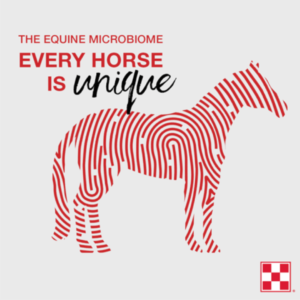
Every horse has a unique gastrointestinal microbiome, as distinct as a fingerprint or the whorl on its head. While unique, the microbiome remains dynamic. Factors like diet, age, metabolic status, activity level, pregnancy status, and disease state drive its development and cause shifts in the microbial population. Therefore, the ideal microbiome for one horse may not suit another. That’s why it’s crucial to understand what constitutes a normal (and abnormal) microbiome before attempting to influence it meaningfully through nutrition.