 The Importance of Soil Testing in Texas can’t be overstated! Soil serves as a vital foundation for farming and agriculture. In Texas, where agriculture is a primary industry, the need to maintain and preserve farmland is crucial for the state’s economy, food security, and environmental sustainability.
Uninformed soil management could lead to low crop yield, decreased farm profitability, and severe environmental degradation. This is where soil testing comes in as a useful tool to assess the nutrient status of the soil. Conducting testing provides benefits for agriculture and the environment; let’s dive into the ways testing your soil can help improve farming practices in Texas, and how Crockett Farm & Fuel can help.
1. Determining soil fertility and soil acidity
Soil testing helps ensure that the soil has sufficient essential nutrients needed for plant growth, such as nitrogen, phosphorus, and potassium. Testing analysis indicates if a soil is acidic or alkaline and the quantity of nutrients that the soil contains. Soil acidity can affect plant growth as it affects nutrient solubility that is necessary for crops. Having an optimal pH balance of the soil allows plants to absorb nutrients and produce healthy yields. Soil testing is a cost-effective way to determine soil fertility status and to establish how much fertilizer the farm needs, even better, it prevents the application of unnecessary fertilizer.
2. Minimizing Environmental Pollution
Over-application of fertilizer could lead to soil pollution and water pollution. Testing eliminates the application of excess fertilizers, mitigating the risks of environmental pollution. Additionally, over-irrigation after fertigation (when fertilizers are added to irrigation water) could result in leaching, leading to nutrient pollution in water sources. Testing ensures a reduced environmental footprint while maintaining the same crop yield.
3. Improving Crop Yields and Trade Opportunities
Farmers in Texas rely on crop yields for food security and as a source of income. Testing soil provides guidance on optimal and appropriate nutrient management, increasing yields. Increased yields allow for potential trade and exports, aiding in the diversification of farm products. Soil testing ensures that farmers comply with state and federal regulations for exportation of agricultural products.
4. Changes in Land Use Planning
Land-use planning decisions should consider soil fertility status. Soils depleted of nutrients could need changes in land use or alternative crops. A testing assessment of yoru soil can mark areas of the farm where soil deficiencies are commonplace, determining the location of field applications. Soil testing regularly helps maintain the quality of the soil and have a stable soil/land use management plan.
5. Enhanced Land Management
Soil testing enhances farm management by managing the quality of soil, leading to sustainable agriculture. The procedure allows farmers to know when to add or eliminate some of their production input. Soil testing provides measures for the reduction of crop pests, soil erosion, and soil compaction.
Paying attention to soil and its content is essential when it comes to ensuring sustainability in agriculture. Soil testing is a practical way to make land-management decisions; testing soil to maintain optimal nutrient levels significantly improves crop yields, lowers costs, and most importantly protects the environment. Soil testing regularly leads to informed farm management decisions, resulting in added farm profitability and sustainability.
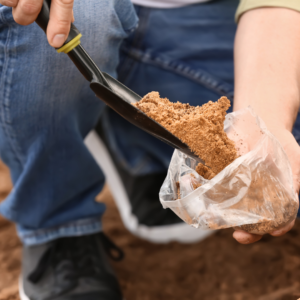
Crockett Farm & Fuel will send your soil samples out for testing. Before you start planting, bring your soil sample by the store. We understand The Importance of Soil Testing in Texas!